Thymosin Alpha-1 — Zadaxin Thymic Immune Peptide by Dragon Pharma
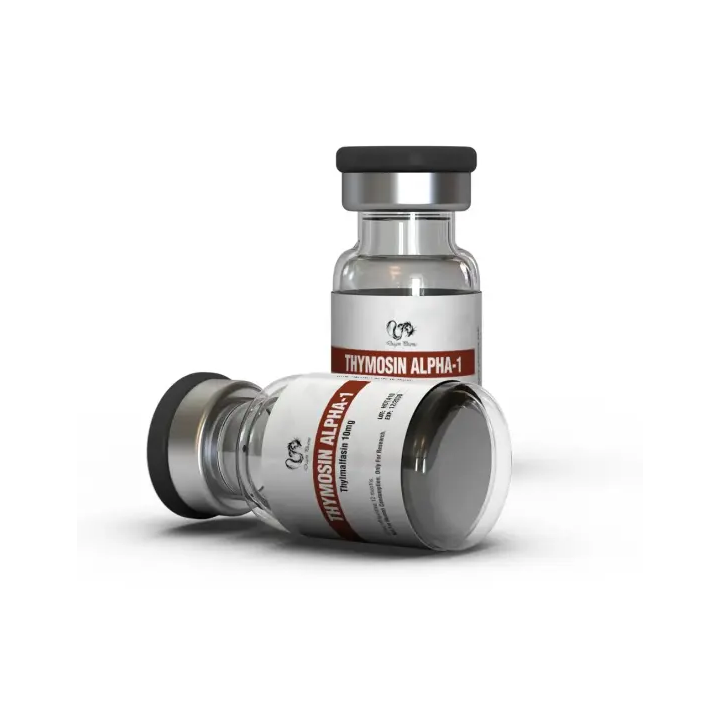
Thymosin Alpha-1 (Tα1, Zadaxin) is Dragon Pharma's formulation of the endogenous thymic immunomodulatory peptide at 10mg per vial — a 28-amino acid, N-terminally acetylated peptide naturally produced by the thymus gland and approved as a pharmaceutical drug (Zadaxin, SciClone Pharmaceuticals) in approximately 40 countries for chronic hepatitis B, chronic hepatitis C, and as an immune adjuvant in cancer treatment. Thymosin Alpha-1 is the most clinically validated immunomodulatory peptide available, with decades of human trial data establishing its safety and efficacy in immune dysfunction contexts.
Also searched as: Thymosin Alpha-1 10mg, Tα1 peptide, Zadaxin, TA1 immune peptide, Thymosin Alpha Dragon Pharma.
What Thymosin Alpha-1 Is — Thymic Origin and Clinical History
Tα1's origin and regulatory status distinguish it from most research peptides:
- The thymus gland produces a fraction of peptides called "thymosins" — identified by Abraham White and Allan Goldstein at the Albert Einstein College of Medicine in the 1960s-70s. Thymosin Alpha-1 (Tα1) was identified as the biologically active N-terminal fragment of prothymosin alpha
- In the body, Tα1 is produced primarily in thymic epithelial cells — it mediates T-cell maturation and differentiation, the fundamental process by which immature T-cell precursors become functional cytotoxic and helper T cells capable of immune defence
- Thymosin Alpha-1 levels decline with age, paralleling the involution (shrinkage) of the thymus — the thymus reduces dramatically in size and function after puberty, with most of its immune-programming work done in childhood and young adulthood. Declining Tα1 is proposed to contribute to age-related immune senescence (the declining immune function of aging)
- Zadaxin (SciClone Pharmaceuticals) is the pharmaceutical synthetic version of Tα1, approved in approximately 40 countries including Italy, China, South Korea and many others — for chronic hepatitis B (as an antiviral immune stimulant), chronic hepatitis C (in combination with interferon), and as an adjunct in cancer immunotherapy. This regulatory history provides a substantial human safety and clinical effectiveness data set
How Thymosin Alpha-1 Works — TLR9 and Dendritic Cell Mechanism
Tα1's mechanism involves both innate and adaptive immunity — a dual coverage that most competitor content reduces to "boosts T-cells":
- Toll-Like Receptor 9 (TLR9) activation: TLR9 is a pattern recognition receptor expressed on dendritic cells and B cells that recognises pathogen-associated molecular patterns (CpG DNA sequences from viruses and bacteria). Tα1 activates TLR9 signalling, stimulating dendritic cells to mature and produce cytokines including IL-12 — a critical cytokine that drives Th1 (cell-mediated) immune responses against viral and intracellular bacterial infections
- Dendritic cell maturation: Dendritic cells are the "commanders" of adaptive immunity — they present antigens to T cells and determine the nature of the immune response. Tα1 promotes dendritic cell maturation and increased antigen-presenting capacity, enhancing the effectiveness of the subsequent T-cell response
- T-cell subset modulation: Tα1 promotes differentiation of naive T cells toward Th1 phenotype (cell-mediated immunity, relevant against viruses, intracellular pathogens and cancer cells) rather than Th2 (antibody-mediated, allergy-associated). This Th1/Th2 balance shift is particularly relevant in immunocompromised states where Th1 responses are depleted
- NK cell activation: Natural killer cells — the first-line innate immune response against virus-infected and cancerous cells — show increased activity and cytotoxicity after Tα1 administration
Thymosin Alpha-1 vs Livagen — The Two Immune Peptides Compared
| Parameter |
Thymosin Alpha-1 |
Livagen |
| Origin |
Thymus gland (endogenous) |
Lymphoid tissue (Khavinson bioregulator) |
| Mechanism |
TLR9 → dendritic cell → T-cell maturation |
DNA demethylation in lymphocytes |
| Primary immune effect |
Acute immune activation; T-cell and NK cell enhancement |
Epigenetic gene reactivation in lymphoid tissue |
| Clinical approvals |
~40 countries (Zadaxin); hepatitis B/C and oncology |
Russian research; no Western regulatory approval |
| Evidence base |
Extensive human RCT data from approved indications |
Russian research programme; limited Western trials |
| Best use |
Acute immune support; antiviral; post-cycle immune recovery |
Longevity and aging immune epigenetics |
AAS Context — Why Immune Support Matters During Cycles
The specific relevance of Thymosin Alpha-1 for AAS users:
- Supraphysiological AAS use — particularly heavy oral 17-AA compound use, high-dose testosterone, and Trenbolone — produces cortisol elevation through HPA axis effects and direct immunosuppressive influences that reduce T-cell counts, NK cell activity and overall immune competence
- Extended AAS cycles, particularly in caloric deficit (cutting phases), are associated with increased susceptibility to upper respiratory infections and impaired wound healing — immune suppression is a meaningful practical consequence of aggressive cycles
- Tα1's T-cell maturation support and NK cell activation provide targeted immune system maintenance during this suppressed period — helping preserve the immune competence that cycles compromise
- Post-cycle, as cortisol normalises and immune function begins to recover, Tα1 can accelerate restoration of T-cell counts and NK cell activity toward baseline
Effects and Benefits
- T-cell maturation and differentiation enhancement — via thymic signalling restoration
- NK cell activation — improved innate immune response against viral and cancerous cells
- Dendritic cell maturation and antigen-presenting capacity improvement
- TLR9-driven Th1 immune response enhancement — particularly relevant for antiviral defence
- Approved antiviral effects in hepatitis B and C (Zadaxin)
- No testosterone suppression — no PCT required
Dosage and Administration
| Protocol |
Dose |
Frequency |
Duration |
| Clinical (Zadaxin approved) |
1.6 mg |
Twice weekly |
6 months (hepatitis B); 6-12 months (hepatitis C) |
| Immune support / AAS cycle |
1–2 mg |
Twice weekly |
Throughout cycle or defined course |
At 10mg per vial and 1.6mg per injection twice weekly (the clinical Zadaxin dose), one vial provides approximately 3 weeks of treatment. The pharmaceutical Zadaxin dose of 1.6mg twice weekly is well-established and provides the most reliable starting point — it is the dose at which decades of clinical safety data were accumulated. Reconstitute with bacteriostatic water. Store reconstituted vial refrigerated at 2-8°C for up to 28 days.


 Security policy
 Delivery policy
 Return policy
Comments (0)
Your review appreciation cannot be sent
Report comment
Report sent
Your report cannot be sent